

Throughout 2023, American educators have faced a rising tide of organized thought police whose aim is to remove texts from libraries that question or challenge their worldview. Their challenges to these texts often falsely label those who read provide access to the texts as pedophiles and deviants who are harming society. The texts that are targeted often feature characters from marginalized communities, are people of color, and/or are part of the LGBTQ+ community or these texts force the reader to tackle difficult issues like coming of age, mental health, and exploitation. My goal is to provide information and resources about challenged texts so that you, the reader, can make informed choices about what you read–because that is your RIGHT! In a society that relies on an educated citizenry for the survival of our way of life (a saying often erroneously attributed to Thomas Jefferson), literacy–READing–is a fundamental RIGHT. Reading for deeper meaning is essential to civic life. Jefferson did say that people could not “approve what they do not understand.” Banning books is promoting ignorance and a threat to intellectual freedom and healthy civic engagement. It keeps people away from understanding. Hence, banning books is a danger to civic life in a democratic America. So, my Project 2024 is to help provide that understanding and to be a fREADom RIGHTer fighting to help others access their rights to read freely and make up their own minds. I will review books that have featured frequently on book ban lists. Some of these texts are classics that are commonly taught in schools. Most of these texts are NOT taught in schools but are merely made accessible for students to make their own choices in reading material.
The Harry Potter Series
by J.K. Rowling
My son was born the year that J.K. Rowling’s first novel, Harry Potter and the Sorcerer’s Stone, was published in the United States (it was published the prior year in the UK under the name Harry Potter and the Philosopher’s Stone). Little did I know then just how large a role Rowling’s world-building books would play in mine and my son’s lives over the course of subsequent years.
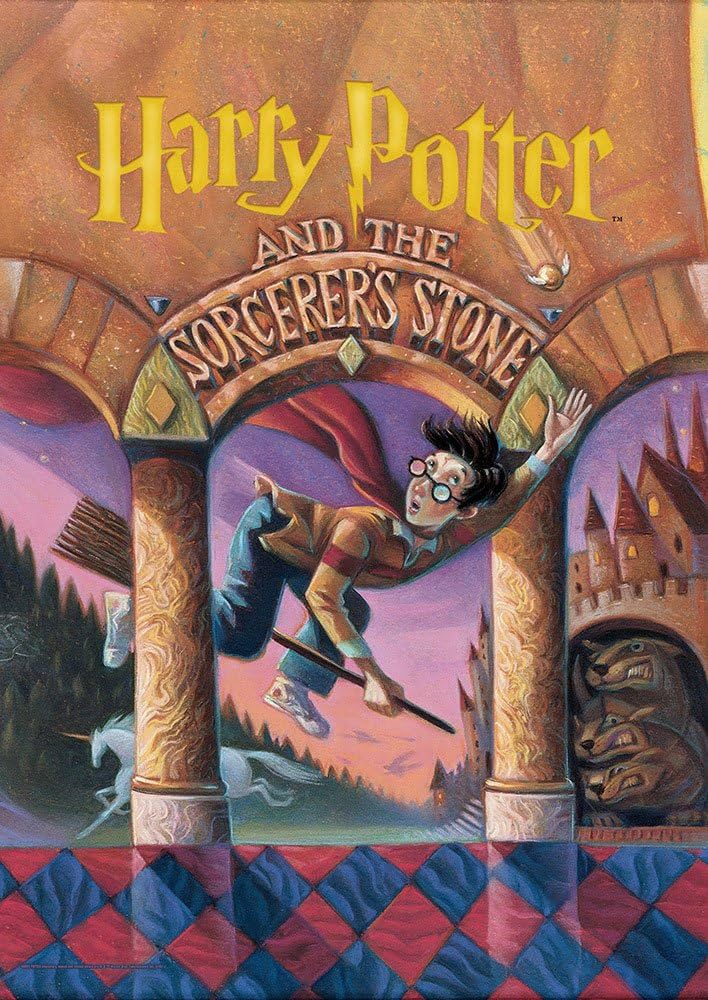
I read to my son every night until he was in middle school. It was a great way to relax, unwind, and get really ready for bed. When he was a toddler, we mostly read Dr. Seuss books, Disney stories, and primary books like Brown Bear, Brown Bear. When my son was four year’s old, two of the four published Potter books had already been made into movies. I had not yet read the books, nor seen the films. My mother worked at a book store and brought home the first three Potter books for me to read. I instantly fell in love with the rich world-building, use of diverse world mythologies (particularly Greek and Celtic), word creation from Latin (lumos from Latin for light and patronus from Latin for protector/father), layered symbolism, and great character development and storytelling. I loved how Rowling paid homage to the stories of old in her world-building too. She incorporated elements from Beowulf (the Tri-Wizard Tournament), The Canterbury Tales (the “Tale of the Three Brothers” can be compared to Chaucer’s “Pardoner’s Tale”), and the Arthurian Legends (Harry is a knight on a quest for relics with his Lancelot and Guinevere by his side).
I also loved how the books grew in complexity as the children aged in the texts too. As the kids grew up, so did the books. My precocious four-year old was interested in learning about Harry Potter, so I decided to begin reading Sorcerer’s Stone to him at night. I started it as an experiment of sorts to see if I could help him develop his attention span. And in no time at all, he was invested. He was asking questions, making predictions, evaluating the actions of characters, and engaging with the text.
It was about this time that I discovered that not all parents saw this series as the wholesome fun that I did. One of my good friends forbade her children from reading the books or watching the movies because it was teaching kids to be enamored of “devil worship.” This friend of mine was also a colleague–an English teacher. When I asked if she had read any of the books–or even excerpts from them–she said that her pastor had told her all she needed to know about them and that she did not want her children to become inquisitive about or curious about the occult or witchcraft. I challenged her to at least read an excerpt from the first novel of the series. I told her that the story has many of the archetypes we teach about–the wise old teacher/sage, the quest, the wicked stepmother, mentors, loyal retainers, etc. I also told her that the books were about friendship, overcoming challenges, accountability, good over evil, facing grief, and resilience. It took many years, but eventually, when her children were teenagers, she finally allowed them to watch the movies with her and her husband. While they didn’t read the books, they at least saw that the choice to use magic for good or for ill in Harry’s world is no different than a mere muggle choosing to ensure benefit over harm in our world.

Needless to say, I continued reading Harry Potter books with my son every night until we finished the seventh and final book of the series, Harry Potter and the Deathly Hallows. It was sort of bittersweet for the series to end because Harry and his world had been part of our nightly lives for over five years at that point. When we finished the series, my son was nearly 10 years old. And he moved on to other fantasy worlds in his nightly reading. We read Tolkien’s The Fellowship of the Ring immediately afterward. And from that point, my son read himself to sleep every night. The middle schooler felt he could do it on his own at that point. To this day, both my son and I have complete hard cover sets of the Harry Potter series next to our Lord of the Rings series. These are the texts that shaped so many of our conversations over the years–about history, about politics, about family, about grief, about friendship, about loyalty, and so much more.

Anyone wanting to take deeper dives into the texts can also explore political constructs like the classism (socio-economic lens) and “pure blood” discrimination (post-colonial lens or critical race lens) central to the strife in the wizarding world. Readers can apply a psychological lens to explore the emotions and mental state of the characters or a gender lens to determine how traditional/non-traditional gender roles are applied through the characters and their actions. There’s so many layers in the Harry Potter series to just erroneously dismiss it as devil worship. The series prompts questions and thinking–just as good books should.
The fear that children will join in league with the devil because they read a story about a shapeshifter (animagi in Rowling’s world) or a witch casting a patronus (a protective charm) is almost like saying that their kids will drink potions to turn into crones to pass out poison apples or that they will become sea witches who steal voices–as they have seen in Disney movies. If parents really fear the world of Harry Potter, then maybe they should take a page from King James I himself. The king read about demonology and witchcraft and wrote a book about it. He didn’t ban the subject. He banned the evil acts themselves. I would challenge any of these parents to actually read these books and be a guide on the side for their children. Or allow their older children to engage and question and explore the ideals of family, love, goodness, loyalty, and altruism that shine in the character of Harry Potter.
The series is comprised of seven books, plus a number of additional texts (books, plays, etc.) that take place within the same wizarding world.
Harry Potter and the Sorcerer’s Stone
Harry Potter and the Chamber of Secrets
Harry Potter and the Prisoner from Azkaban
Harry Potter and the Goblet of Fire
Harry Potter and the Order of the Phoenix
Harry Potter and the Half-blood Prince
Harry Potter and the Deathly Hallows
You can buy the complete set of seven books here.
You can learn how to view the eight movies here.
Other Harry Potter Resources:
Wizarding World: The Official Home of Harry Potter
Lumos: J.K. Rowling’s charity helping orphaned children find homes.
Be a fREADom RIGHTer: join the fight against banning books! Here’s some resources to learn more:
Little Free Library fighting book bans.
Banned Books Week resources.
Unite Against Book Bans talking points.
American Library Association resources.

 Oh Yes Jules Did
Leave a comment